Wellness in a Go-Go World: Nordic Spas, Nature, and Self-Care
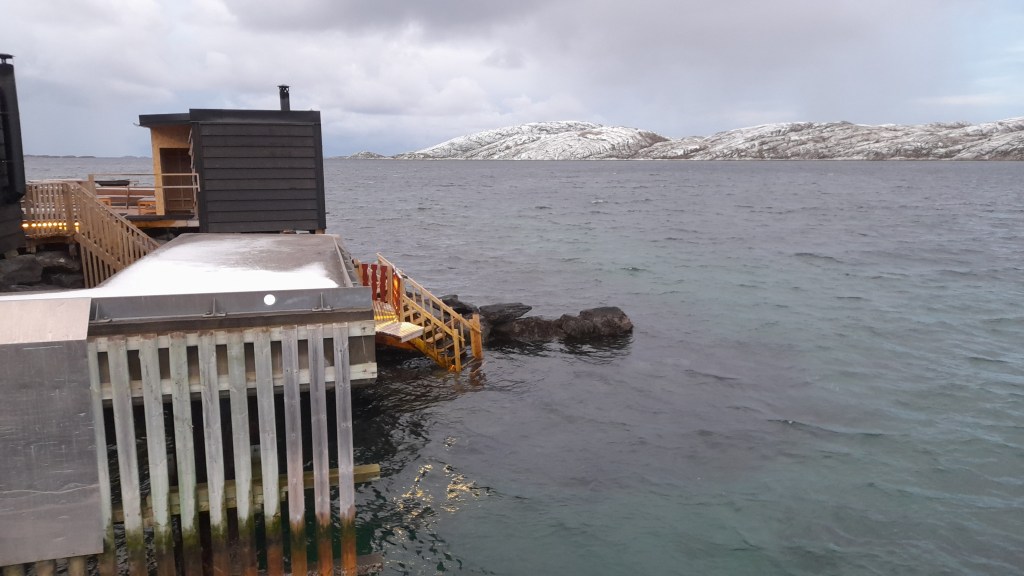
Over the December holidays, while taking a break in Canada from my research on human-water relationships in arctic Norway, I read a CBC article titled “Nordic Spas Booming Amid ‘Unlimited’ Consumer Appetite for Wellness“ which caught my attention. The article highlights a growing trend: the rapid expansion of the wellness industry, with Nordic spas, and sea-side saunas becoming key players. Spas nestled in mountain settings, overlooking rugged coastlines, or mobile saunas perched on the beach are booming, marketing themselves as serene escapes from life’s chaos to potential customers. For business owners, these picturesque settings offer more than just views — they’ve become lucrative opportunities to tap into the wellness economy.
But what’s driving this surge in demand for wellness through heat, cold, water, and nature?
What’s Going On: The Rise of the Wellness Economy
The wellness industry has exploded in the wake of the COVID-19 pandemic. Simply peruse your local bookstore or do an internet search for ‘wellness’ and you are likely to conjure up descriptors such as ‘complete’ wellness, ‘holistic’ wellness, ‘rewire’ wellness, wellness ‘projects,’ and wellness ‘bucket lists.’ As mental health and wellbeing became a household topic seemingly overnight, the demand for services, products, and spaces that cater to wellness skyrocketed. Packaging together yoga classes, meditation, apps, facials and manicures, workout spaces, hot and cold pools, saunas, steam rooms, wellness coaching, and other traditional spa offerings, wellness has been commodified in ways unimaginable just a decade ago.
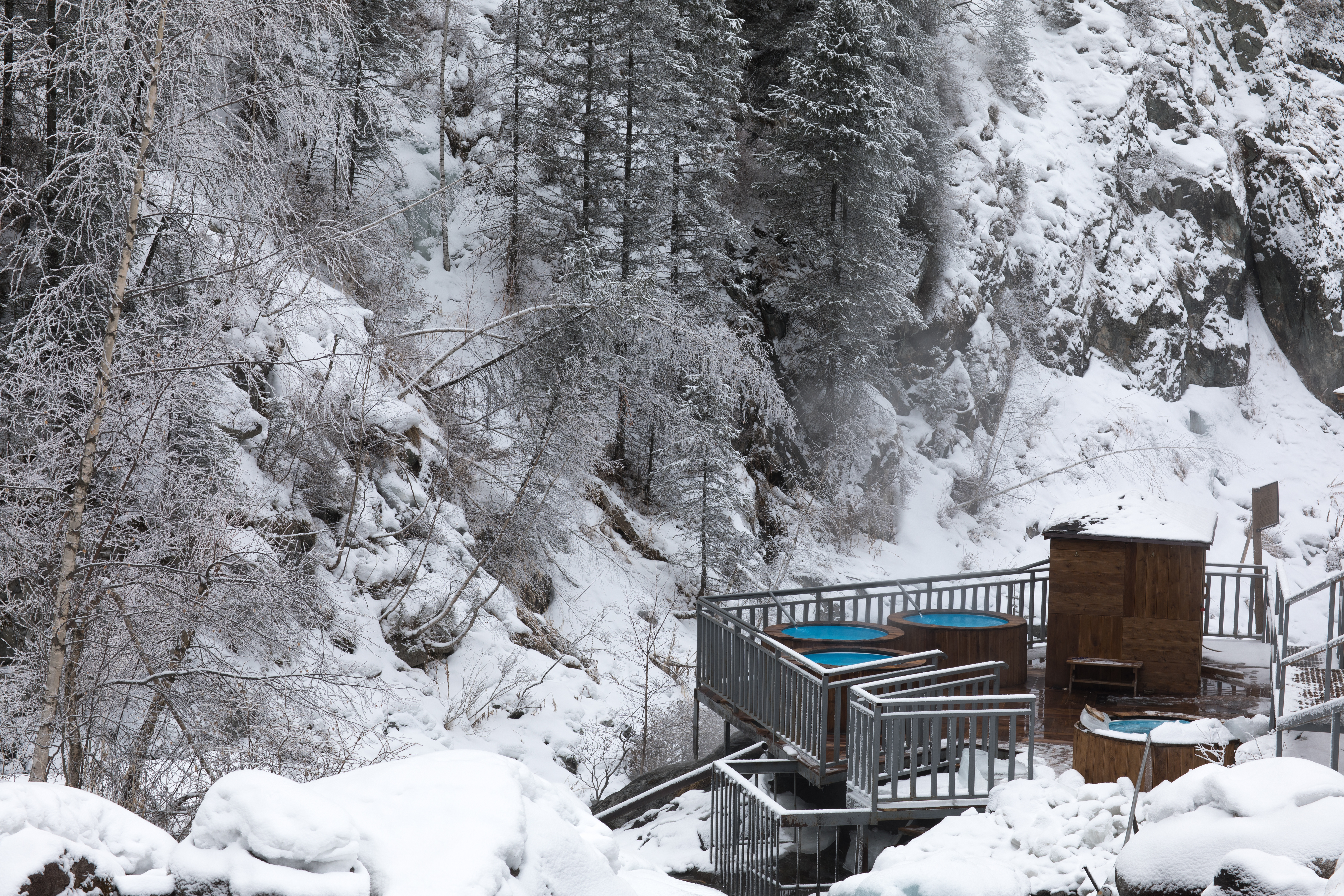
Nordic spas are a prime example. Designed to help busy people relax between commitments, these high-end experiences cater to those seeking respite in a fast-paced, overworked world. Yet, they come at a cost — not just for consumers, but for the planet. Maintaining these spa environments requires immense resources to heat, cool, and clean water. In addition, they are often built in areas which then make those natural spaces exclusionary, charging a premium price for the experience.
In contrast, a quieter, grassroots movement is thriving — one that embraces simplicity and the natural environment. Pop-up saunas on beaches, initiatives like Belgium’s POOL IS COOL, numerous sauna’s that dot Norway’s extensive fjords, and outdoor swimming/bathing groups in Arctic Norway offer low-cost or even free ways to reconnect with nature while prioritizing wellbeing. These experiences often emphasize embracing discomfort, such as cold water immersion, which has been shown to have profound physical and mental health benefits. However, the practice of cold water swimming and bathing is not without it’s risks.
Why It’s Important: Wellness Is Not Instant Gratification
We live in an era of instant gratification, where nearly anything can be purchased or delivered at the click of a button. But wellness — true wellness — is not something you can buy. Anthropologist Iza Kavedžija has called wellbeing an ongoing process entangled with the relationships we make, break, and maintain through life. While money can purchase spa memberships or retreats, much of the research on wellbeing points to something more accessible and meaningful: immersion in natural environments.
A walk in the park, a swim in the ocean, or a hike in the mountains often costs little and provides significant benefits. These experiences reconnect us to the natural world, and to each other, offering not only physical health benefits but also mental clarity and a sense of belonging — qualities essential for resilience in today’s world of accelerated change.
This is particularly important as humanity faces wave after wave of global crises. From biodiversity loss and sea-level rise to extreme weather events, the environmental challenges before us are immense. The anxiety caused by these crises — termed solastalgia — can be paralyzing. Yet, tackling these challenges requires resilience, energy, and focus, which are hard to muster if we’re overstressed, overworked, or mentally unwell.

Planetary Wellness: A Reciprocal Process of Becoming
The path forward begins with reciprocity. The anthropologist and environmental activist Wade Davis recently commented, “Most people around the world interact with the natural world not through a kind of a metaphor of extraction, but through some notion of reciprocity, of basic iteration, of the idea that the Earth owes its bounty to people. People, in turn, offer fidelity to the world.”
When we take time to nurture our own mental and physical wellbeing, we build the foundation needed to face larger challenges. By doing so with nature we shape that reciprocal relationship of ecosystem services and services to ecosystems. You don’t need to spend hundreds of dollars at a luxury spa in an attempt to achieve this. Instead, consider embracing simpler, nature-based practices. Take a cold-water dip in a local lake, visit a pop-up sauna, take a walk in the forest, or simply walk barefoot on the beach. These moments of connection to the natural world are not only grounding but also deeply empowering.
In the words of the anthropologist Thomas Eriksen, today’s world is one of “overheating,” where accelerated change has become the norm. To navigate this, we must cultivate resilience — and that starts with small, mindful acts of care for ourselves and our communities.
So, take a moment to pause. Step outside. Breathe in the fresh air. Try your hand at a cold dip with others. And remember: wellness is something we build, one moment at a time.
 Sean Heath, Ph.D.
Leave a comment